
Hennepin County City Directory Holdings
Hennepin County’s historical shelf is spread across Hennepin County Library Digital Collections, Minneapolis Central, and Minnesota Historical Society services. The documented Minneapolis run begins in 1859. HCL does not present one publisher as the rule for every volume, so record the title page from the year in hand. A 1940 context source identifies Minneapolis Directory Company, but that fact does not establish a publisher for the whole run. The library collection also reaches outside Minneapolis, which matters when a household crossed a city line without leaving the county.
| Collection | Years | Where held | Access |
|---|---|---|---|
| Minneapolis directories | 1859–1950 on the library collection page; later collection reporting reaches 1963 | HCL Digital Collections and Minneapolis Central Special Collections | Name or address search online; later volumes also use print or microfiche |
| Edina directories | 1941–1977 | HCL Digital Collections and Minneapolis Central | Digitized name and address access |
| Hopkins directories | 1942–1977 | HCL Digital Collections | Digitized household and address access |
| St. Louis Park directories | 1933–1977 | HCL Digital Collections | Digitized suburban coverage |
| Phone books and Yellow Pages | Phone books 1933–1975; Yellow Pages 1933–1963 | HCL and MNHS collection routes | Runs can be incomplete; verify the selected year |
Hennepin County Library’s genealogy and local-history collection is the starting catalog for these directory runs, yearbooks, maps, and related material.
The library layer is especially useful when a county record supplies an address but no household history.
Directory coverage changes as material is digitized, and some old public descriptions give different end years. Check the live collection record for the volume needed rather than treating an older coverage note as a promise. Note: A directory entry is evidence for a printed year, not proof of a person’s current location.
Hennepin County Directory Shelf Break
The practical HCL boundary is important. Its house-history guidance describes 1859–1922 volumes as freely digitized and keyword-searchable, while directories from 1922 forward are represented through print and microfiche at Minneapolis Central, with 1923–1929 PDFs available in Special Collections. The collection landing page and later newsletter show continuing additions, so this is an access boundary, not a claim that every later directory is absent from the web.
For a later year, take the name and exact address to Minneapolis Central and ask for the relevant print, microfiche, or Special Collections item. For a suburban search, select the municipality as well as the year. The digital checklist also identifies Lake Minnetonka directories for 1941–1977 and Morningside for 1962–1966. Those narrower runs can explain why a Minneapolis-only search produces no hit.
HCL Digital Collections offers directory volumes, phone books, neighborhood images, and searchable local-history material.
Minnesota Historical Society People Records provides a companion search when a directory name needs wider historical context.
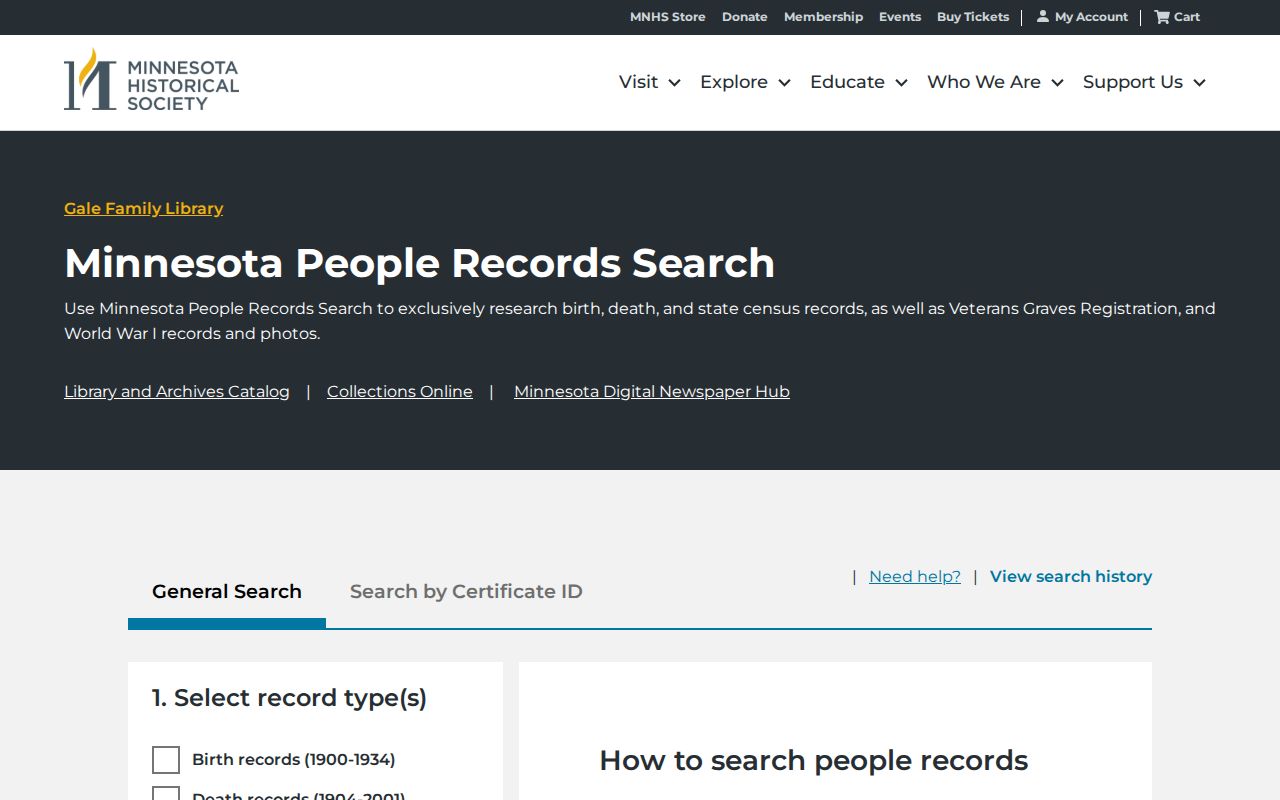
A directory name can be paired with the Minnesota Historical Society people-records search when a wider historical record is needed.
Hennepin County Directory OCR Searches
Start with the name when it is distinctive. Then reverse the approach and search the address. HCL describes address-keyword searching and reverse lookup for a block or area, but the collection depends on exact OCR strings. Enter the street number with a normalized street name first. If that fails, try both St and Street, directional forms such as N and North, an earlier street name, and likely number variants.
An empty result can mean an OCR error, not an absent household. Numbers and directional letters are easy for old scans to misread. Browse the street alphabetically in the selected printed or microfiche volume, and inspect one or two pages on either side of the expected address. Save the volume year and page image with the search notes. That makes a later correction possible when a street was renamed, renumbered, or assigned to another municipal directory.
Hennepin County Directory Archive Fallbacks
When the library search is thin, the Hennepin History Museum Archives & Research Library adds directory volumes, Sanborn maps, clipping files, yearbooks, atlases, local reference books, and neighborhood photographs. Research is by appointment at the museum archives. The library has one public computer with access to Ancestry.com and Minneapolis newspapers.com, plus a card catalog and copy machine with a small printing fee.

That combination lets an address lead move from a directory page to a map, clipping, or yearbook without assuming all material shares one online database.
Minnesota Historical Society offers a staff directory and telephone-book search for one name or business in up to five years. The stated charge is $20, including a $5 nonrefundable processing component. Usual turnaround is three to four weeks, with some searches taking longer. A no-hit order returns the expected page, which is useful documentation rather than an unexplained silence.
Reading Hennepin County Directory Entries
An entry is compact, and its meaning changes by volume. Capture what the page actually prints instead of expanding an abbreviation from memory. Directory listings often favor the head of household, so children, boarders, and other people in a dwelling may not appear. Women may be listed separately when single, widowed, or divorced. A residence line is a strong historical lead, but not a complete household census.
| Name | Surname and given name or initials, alphabetized; record spelling precisely. |
|---|---|
| Household clue | Spouse name or a parenthetical spouse reference when the selected volume prints one. |
| Residence | Street address, sometimes with apartment or room information. |
| Work detail | Occupation and a business affiliation when printed. |
| Status notation | Widow or widower wording, owner or renter notation where the run uses it, and business-listing details. |
| Locator | Volume year, page, city or town section, and the scan’s OCR text. |
Copy the entry exactly, then add the volume year and page. A page locator makes a later comparison possible when a spelling, status mark, or address has been read differently in another source.
- Criss-cross directory
- An address-ordered or street-ordered portion of a directory used to look from a location back to listed occupants or businesses.
- Householder index
- An alphabetical listing that usually centers on the person identified as the household head, not every person at the address.
- Abbreviation key
- The legend printed in a particular volume. Read and record that year’s key before assigning a meaning to a mark.
Hennepin County Directory Digitization
HCL’s March 2026 Special Collections newsletter reports that Minneapolis-area phone books from 1933–1975 and Yellow Pages from 1933–1963 were added to its directory collection. The same report describes Minneapolis directories from 1859–1963 and many suburban municipality directories. It also says readers can browse or keyword-search an address or last name within one directory or across the collection.
The March/April 2026 Special Collections newsletter is a useful update point before planning a research trip. Its reported growth does not erase the need to check print and microfiche. A scanned run can be broad while still missing a target year, and a phone-book listing may omit a household that a directory carries.
Minneapolis directories are notably older than modern county web portals. Their value is historical continuity, while their limits are equally important: spelling changes, OCR errors, directory inclusion rules, and separate city runs need to stay visible in the research notes.
Hennepin County Directory Family History
Family history is strongest when a directory is read as a sequence. Start with a complete name and likely municipality, then keep a short log of spelling, middle initial, spouse, occupation, and address. An address can be the more stable clue, but it must be checked against city designation, old street names, and the possibility that a building or lot changed. A directory disappearance can reflect a move, a death, a listing change, or a missed scan.
- Locate the first plausible name entry and record the exact year, page, spelling, address, spouse notation, and occupation.
- Search adjacent directory years. Note every address change and check the relevant Hennepin municipality’s separate run.
- When a name search fails, search or browse the address in the reverse or street-ordered material and test OCR variants.
- Pair directory years with the federal census years 1870, 1880, 1900, 1910, 1920, 1930, 1940, and 1950. Census schedules help identify children and other household members.
- Use newspapers or an obituary to test for a move or death, and use permits, plats, or Sanborn maps to confirm the building behind the address.
The public federal census schedule currently reaches 1950 under the 72-year release rule. Census can fill the household gap that a directory leaves. Newspapers and probate materials can then help explain a final disappearance, but each record should retain its own date and source rather than being turned into a single unverified narrative.
Hennepin County Directory Identity Leads
For a family that appears in a directory but has an uncertain origin, HCL’s local-history resources can be paired with yearbooks, newspapers, maps, court material, and historical-society records. Minnesota Historical Society holds naturalization material from all 87 Minnesota district courts, commonly spanning the 1850s through the 1940s. Federal Minnesota naturalization records follow a separate NARA route, so repository and court level matter.
Minnesota Historical Society’s historic naturalization research service describes one formal route for that work.
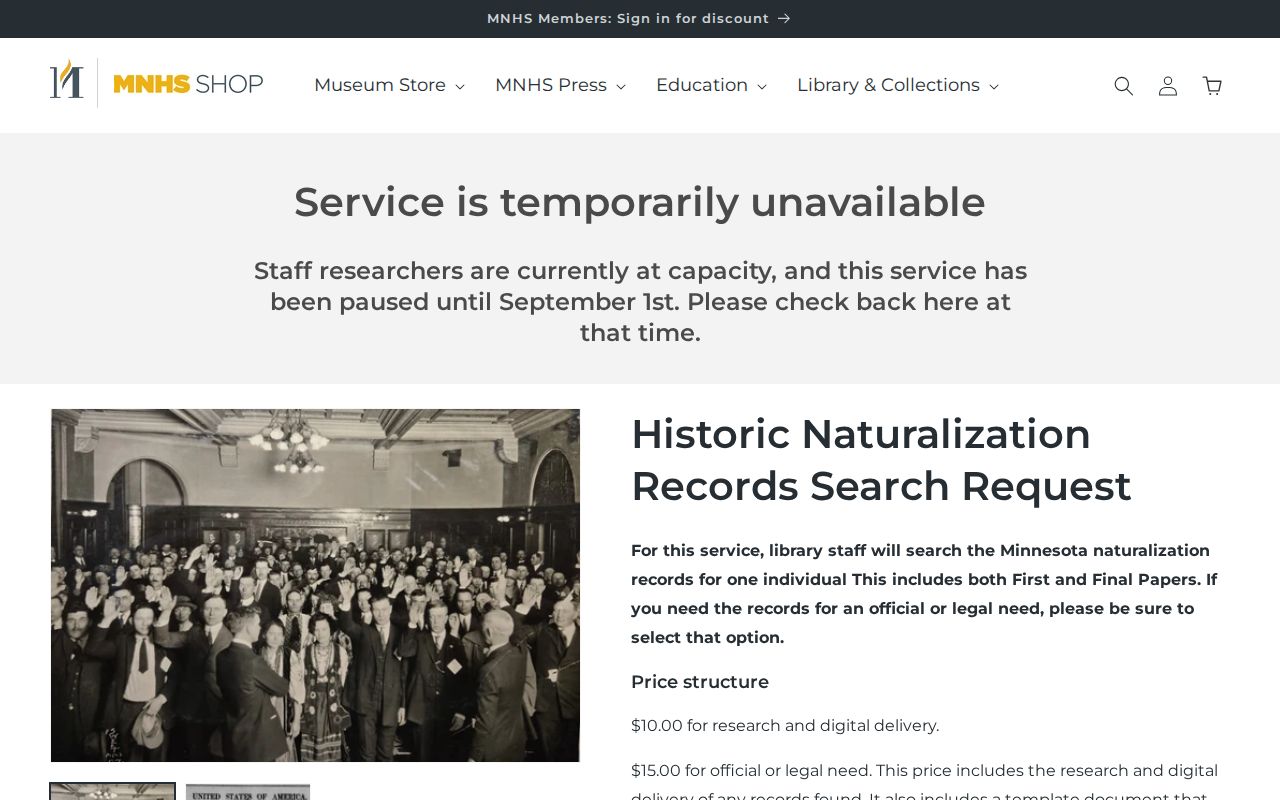
A directory address and occupation can help distinguish similarly named people before requesting a historical record.
Do not assume that every adult in a household has a separate naturalization file. Women and minors may be represented differently, and a directory’s household-head convention remains a limit. Note: Repository records can provide context, but the directory page and its year remain the evidence for the listing itself.